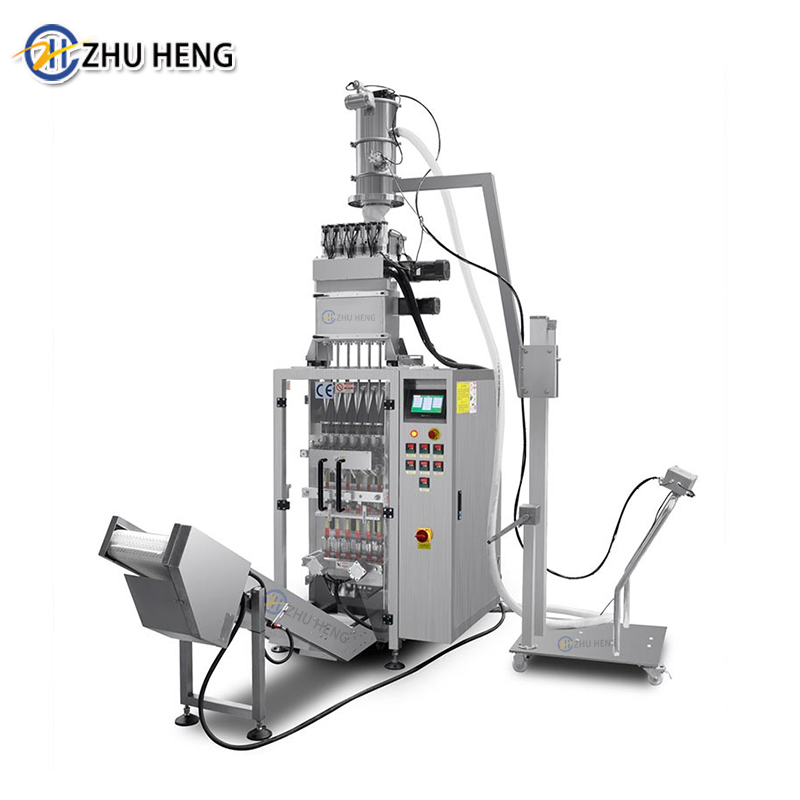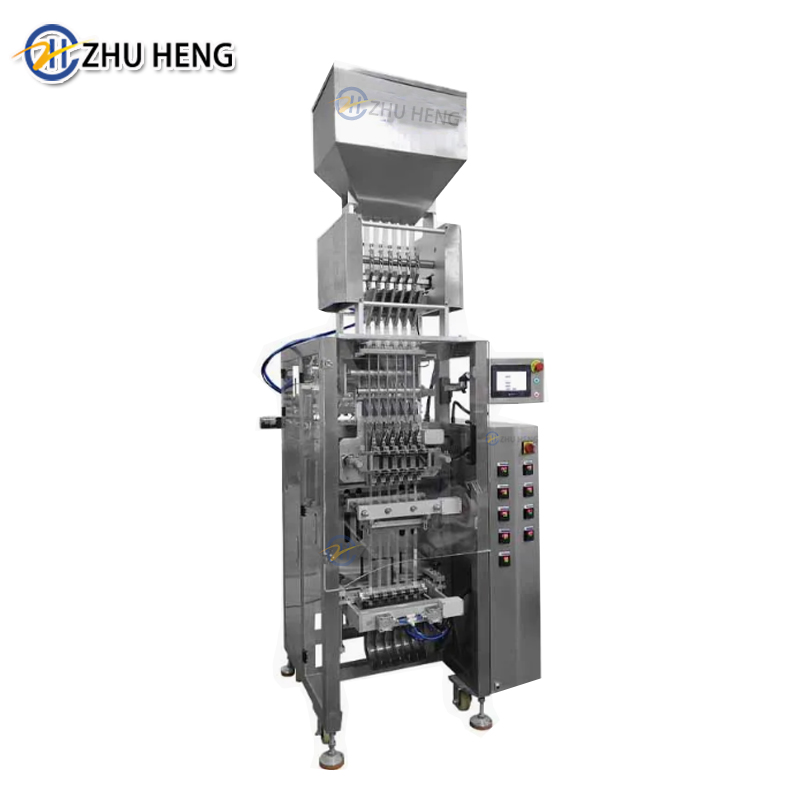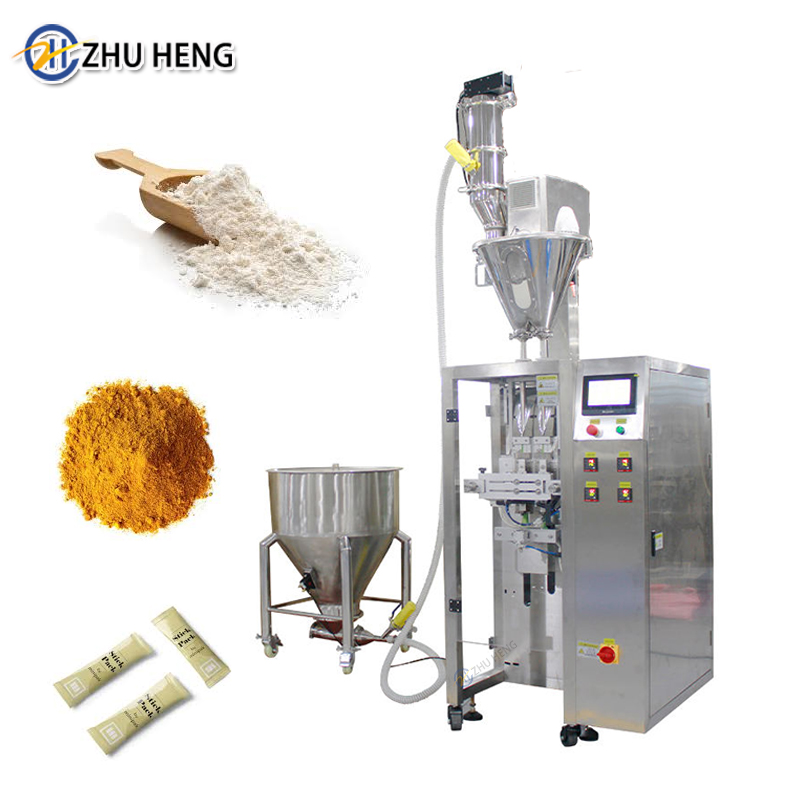
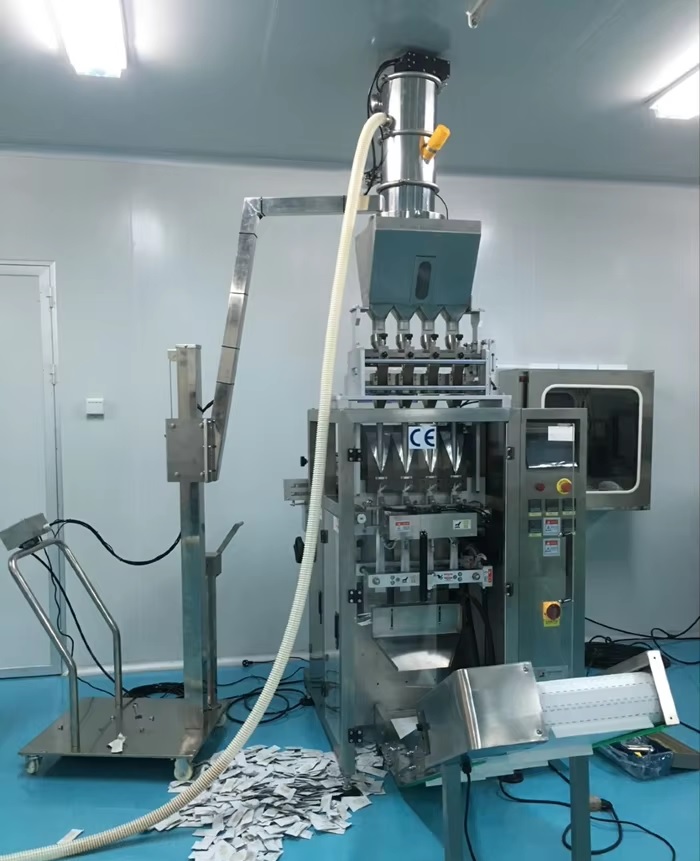
Multi-lane Stick Pack Packaging Machines are high-efficiency automated systems that simultaneously form, fill, seal, and cut multiple narrow, single-dose stick pouches from a single roll of flexible film. Operating on the vertical form-fill-seal (VFFS) principle synchronized across 2–24 parallel lanes, these machines deliver unmatched speed, precision, and consistency for powders, granules, liquids, and solids in food, pharmaceutical, and consumer goods industries. This article breaks down their core components, step-by-step workflow, and advanced technologies that enable seamless, high-volume production.
Core Components of a Multi-lane Stick Pack Machine
A modern multi-lane stick pack machine is a modular system with eight integrated modules, each optimized for synchronized, high-speed performance:
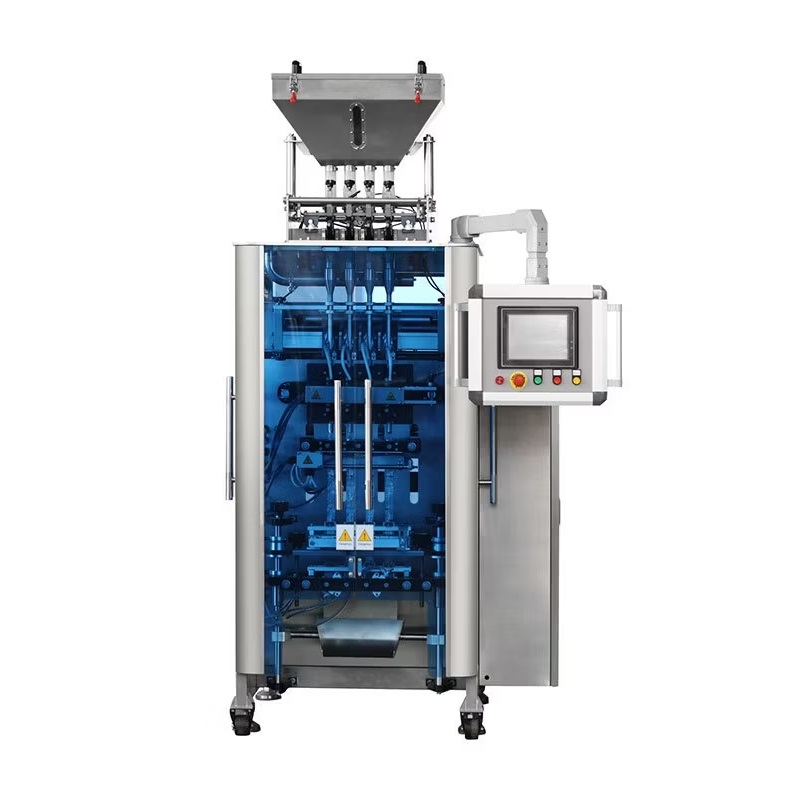
1. Film Unwinding & Tension Control System
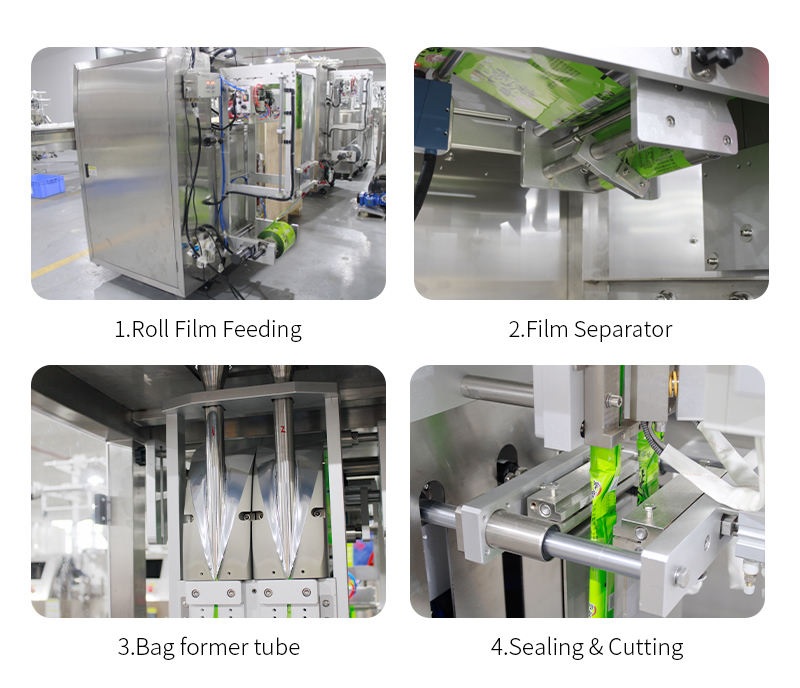
- Unwind Stand: Holds large-diameter rolls of heat-sealable laminated film (PET/AL/PE, paper/PE, or compostable films).
- Dancer Arm & Magnetic Brake: Maintains constant, uniform film tension to prevent stretching, wrinkling, or breakage.
- Photoelectric (EPC) Corrector: Tracks printed film registration marks and corrects lateral positioning in real time, ensuring perfect seal alignment across all lanes.
- Film Slitter (Optional): Divides a single wide web into precise parallel strips for multi-lane forming.

2. Multi-lane Forming System
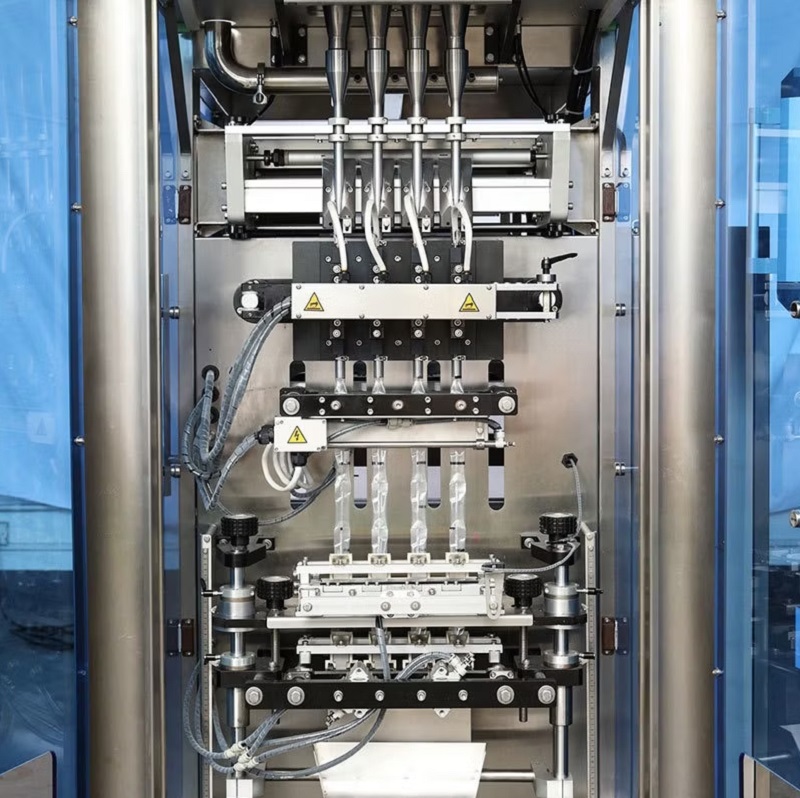
- Stick Formers (Tubes): Stainless-steel, lane-specific forming tubes that fold flat film into long, cylindrical stick shapes.
- Servo-Controlled Film Pull Rollers: Clamp-type or belt-driven servos precisely index film forward by set lengths, ensuring consistent bag dimensions.
3. Product Feeding & Metering System
The heart of accuracy, with lane-independent dosing:
- Powders: Servo-driven auger fillers (with agitators for cohesive powders) → ±0.5–1% accuracy.
- Granules/Pellets: Volumetric cups or multi-head weighers.
- Liquids/Gels: Piston pumps, peristaltic pumps, or gravity-flow nozzles.
- Common Feeder: A single hopper with lane-divided chutes feeds all dosing units simultaneously.
4. Vertical (Longitudinal) Sealing Station
- Heat Sealing Bars: Individual heated jaws (one per lane) with independent PID temperature control.
- Seal Types: Creates lap seals (overlapped, slim profile) or fin seals (folded edge).
- Pressure & Speed: Servo-controlled force and dwell time ensure strong, leak-proof seams without film burn-through.
5. Horizontal Sealing & Cutting Station
- Dual-Action Sealing Jaws: Heated cross-seal bars that simultaneously:
- Seal the top of the finished stick.
- Seal the bottom of the next stick (forming a continuous tube).
- Integrated Rotary/Shear Cutter: Cuts between cross-seals to separate individual sticks.
- Notch Device: Adds easy-tear notches above cross-seals for consumer convenience.
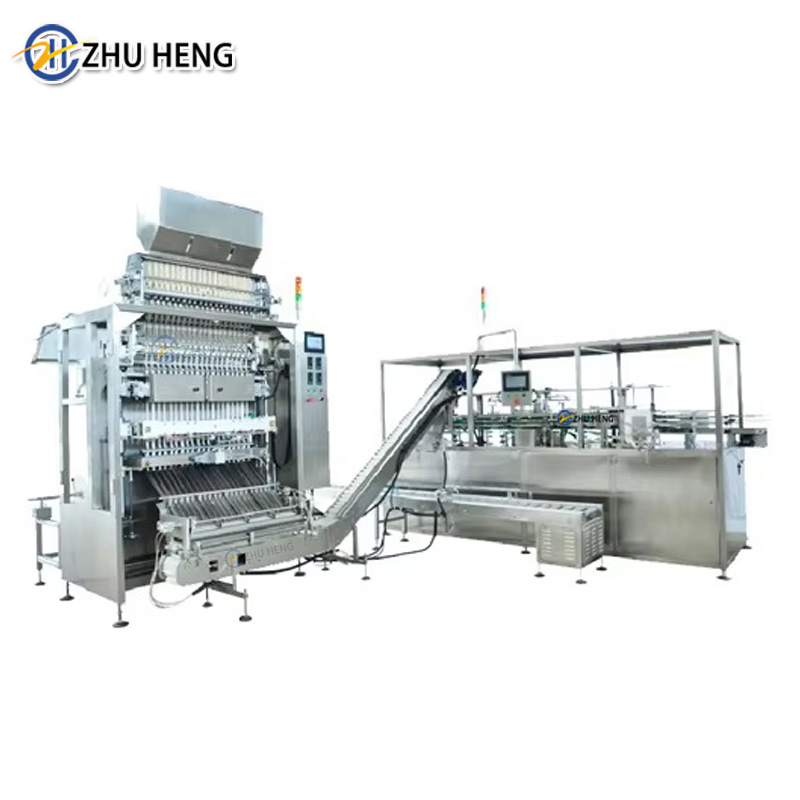
6. PLC & HMI Control System
- Industrial PLC (Siemens/Mitsubishi): The “brain” synchronizing all servo motors, temperature, and sensors.
- Touchscreen HMI: Stores production recipes (bag length, fill volume, temperatures), shows real-time output, and triggers alarms.
- Fault Diagnostics: Auto-stops on film break, low product, or seal errors to minimize waste.
7. Product Discharge & Collection
- Lane-Specific Chutes: Guide finished sticks to a common conveyor.
- Conveyor Belt: Transports packs to downstream equipment (counting, cartoning, inspection).
8. Sanitary & Safety Modules
- Stainless Steel (316L) Product Contact Parts: Complies with FDA, GMP, and food safety standards.
- Safety Guards & Interlocks: Enclose heat/seal areas for operator protection.
Step-by-Step Working Process
The machine operates as a synchronized, continuous cycle across all lanes:
Stage 1: Film Unwind & Preparation
- The film roll unwinds, guided through tension rollers and the EPC corrector to maintain alignment.
- The web is split into multiple lanes (if needed) and pulled toward the forming tubes.
Stage 2: Stick Forming
- Flat film is wrapped around each lane’s forming tube, creating a continuous vertical cylinder.
- Servo pull rollers advance the film by a precise length (bag length).
Stage 3: Vertical Sealing
- Heated vertical bars clamp the film’s overlapping edge.
- Heat/pressure melts the film’s inner layer, forming a permanent longitudinal seal.
- Seals cool slightly to set before filling.
Stage 4: Precision Filling
- The metering system doses the exact product volume into each open tube.
- Gravity (or positive displacement) delivers product to the bottom of the tube, above the lower cross-seal.
- All lanes fill simultaneously for perfect synchronization.
Stage 5: Horizontal Sealing & Cutting
- Horizontal jaws close across all lanes, sealing the top of the filled stick and the bottom of the next.
- The integrated cutter separates the finished stick from the web.
- The cross-seal cools, and the stick drops to the discharge chute.
Stage 6: Cycle Repeat
The film indexes forward, and the cycle repeats—hundreds of times per minute per lane.
Key Technological Advantages
1. Full Servo Synchronization
- Electronic Line Shaft: All axes (film, sealing, filling, cutting) are electronically geared for perfect timing—no mechanical gears.
- Quick Changeover: Adjust bag length, fill volume, or speed via HMI in <10 minutes.
2. Unmatched Efficiency
- High Output: 40–120 sticks/min/lane → 8-lane machine = 960+ sticks/min.
- Low Waste: Precise film control reduces scrap to <1%.
- Small Footprint: 1 multi-lane machine replaces 6–12 single-lane machines, saving 40–60% floor space.
3. Superior Seal Quality
- Individual Temp Control: Each lane’s seal heat is monitored/adjusted to eliminate weak seals.
- Constant Pressure: Servo-controlled sealing force ensures uniform seals regardless of film thickness.
4. Versatility
- Wide Product Range: Powders (coffee, protein), granules (sugar, salt), liquids (honey, sauce), tablets.
- Flexible Sizing: Bag widths (10–40 mm), lengths (50–180 mm), fill volumes (0.5–50 ml).
Applications & Industries
- Food & Beverage: Coffee, sugar, spices, protein powder, energy drinks.
- Pharmaceuticals: Pills, probiotics, herbal extracts, single-dose meds.
- Personal Care: Toothpaste, shampoo, lotions, cosmetics.
- Industrial/Other: Detergents, chemicals, seed packets.


Conclusion
A multi-lane stick packs packaging machine is a pinnacle of automated packaging engineering. By integrating precision servo control, synchronized multi-lane forming/filling/sealing, and intelligent PLC management, it transforms raw film and bulk product into thousands of perfect, single-dose sticks per hour. Its unmatched speed, accuracy, and flexibility make it indispensable for manufacturers scaling production while maintaining strict quality and compliance standards.
For businesses, investing in multi-lane stick pack technology means lower labor costs, higher output, consistent quality, and faster time-to-market—key competitive advantages in today’s fast-paced consumer goods landscape.